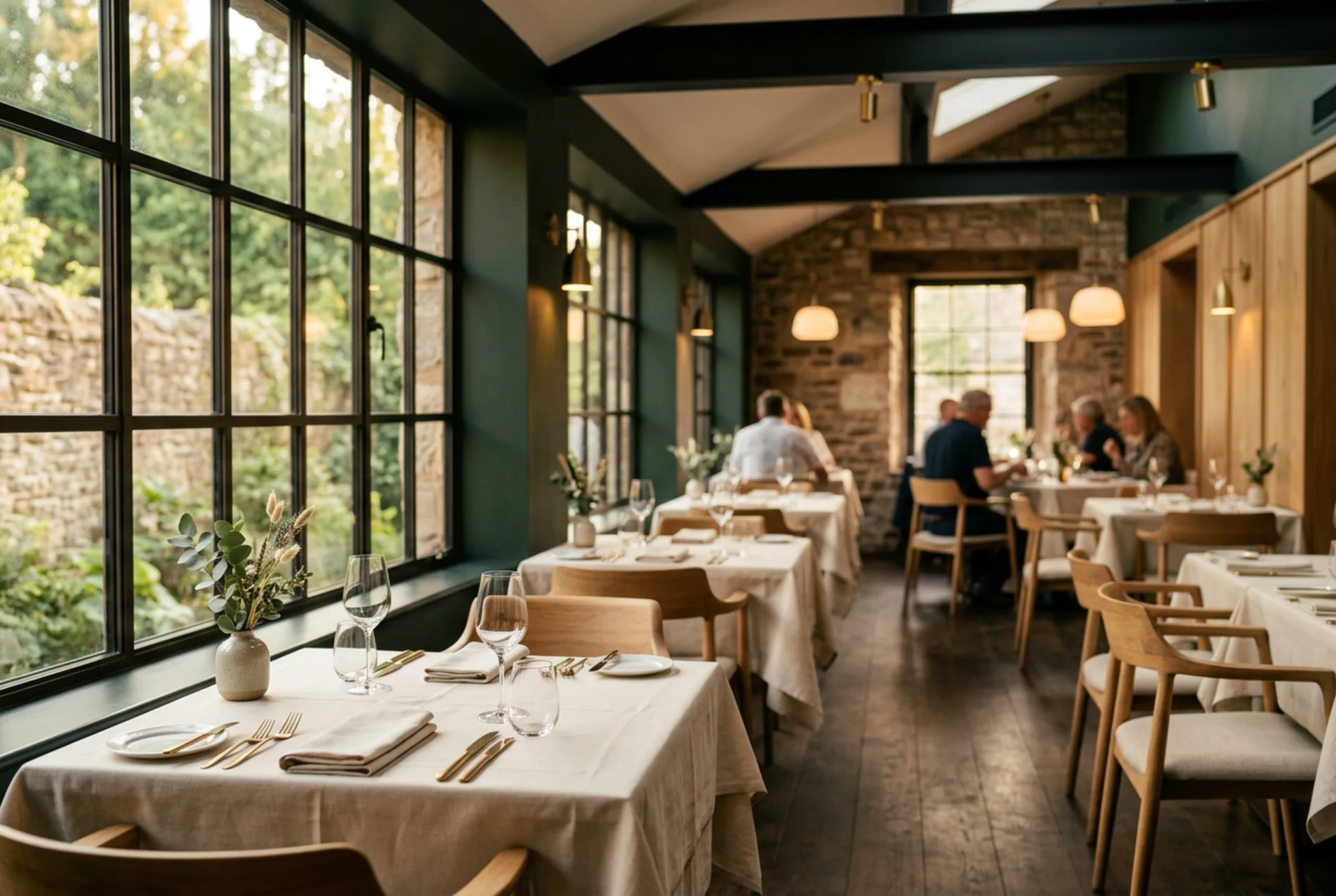
Ask a hundred independent restaurant owners what worries them, and you will hear the same story from very different businesses. A neighbourhood bistro in the UK, a fast-casual bowl concept in the US, a bakery in Canada, a pizzeria in Australia, a coffee shop in a busy city centre — the format changes, but the question does not: "We are always busy. Why aren't we making any money?"
It feels like a contradiction. Everyone told you that filling seats was the whole game. Get people through the door, keep the kitchen moving, and profit would follow. So you did exactly that. The reviews are good. The regulars keep coming. And still, when the accountant sends over the numbers, the profit is thin, non-existent, or worse.
Here is the uncomfortable truth that this guide is built around: a full restaurant is not the same as a profitable restaurant. Being busy proves that people want what you sell. It says nothing, on its own, about whether each sale actually makes money once every cost is paid. Profit does not leak out in one dramatic moment. It disappears quietly, a few cents at a time, across thousands of transactions — in over-portioned plates, in food thrown away at the end of the night, in an extra person on shift during a quiet hour, in a menu that steers customers toward your least profitable dishes, in a discount that has quietly become permanent.
This is a long, deliberately thorough guide, because the problem is not caused by one thing and cannot be fixed by one thing. It applies to every kind of food business — independent restaurants, coffee shops, bakeries, fast casual, quick service, pizzerias, casual dining, fine dining, dark kitchens, groups, multi-location operators and franchises alike. No single segment is spared, and none is singled out. By the end you will understand the difference between revenue and profit, you will be able to read your own P&L, you will know where the biggest leaks hide, and you will have fifteen concrete levers, a set of KPIs, an action plan and a checklist to start closing the gap between "full" and "profitable".
In this guide you'll learn
- •Why revenue and profit are not the same thing — and why owners fixate on the wrong number
- •How to read your restaurant P&L line by line, from revenue to net profit
- •The invisible profit leaks that drain a busy restaurant unnoticed
- •15 concrete ways to improve profitability, each with best practices, examples and KPIs
- •The KPIs every owner should track and how often to review them
- •A practical action plan and checklist to start recovering profit this week
In this guide
Revenue versus profit: the number that actually matters
The single most expensive misunderstanding in hospitality is treating revenue and profit as if they were the same thing. They are not. They are barely related. Understanding the difference is the foundation of everything else in this guide, so it is worth slowing down here.
Quick answer
Revenue is all the money that comes in. Profit is what is left after every cost goes out. A busy restaurant generates a lot of revenue by definition — but revenue pays for nothing on its own. Only profit pays your rent, your wages, your suppliers and, eventually, yourself.
Imagine two restaurants on the same street, each taking in exactly the same amount of money every month. On paper, they look identical. One is comfortably profitable and its owner sleeps well. The other is quietly drowning. The difference has nothing to do with how much they sell and everything to do with what it costs them to sell it. Same revenue, opposite outcomes. This is why "we had a record week" can be a trap: a record week with runaway costs can still lose money.
Revenue is a vanity metric when it stands alone. It feels good, it is easy to talk about, and it is the number owners instinctively quote. Profit is the sanity metric. It is harder to look at, it is often smaller than you hoped, and it is the only number that tells you whether the business actually works. The owners who thrive are the ones who train themselves to care about the second number as much as the first.
Key takeaway: Being busy tells you customers want what you sell. Being profitable tells you your business can survive selling it. They are different questions, and only the second one keeps the doors open.
Where the money really goes: the restaurant P&L explained
To fix profitability you have to be able to read the path money takes from the customer's card to your bank account. That path is your profit and loss statement, and every line on it is a place where profit is either protected or lost. Here is the journey, in plain language.
Revenue
This is the top line: everything you take in from food, drink, delivery and any other sales, before a single cost is subtracted. It is the biggest, most visible number, and it is where most owners stop looking. Everything below it decides whether that revenue turns into profit or evaporates.
Cost of goods sold and gross profit
Cost of goods sold is what you paid for the ingredients and drinks you actually sold. Subtract it from revenue and you get gross profit — the money left to cover everything else. In practice this is dominated by food cost: the ingredient cost of every dish. When food cost drifts up by even a few points, gross profit falls by the same amount, and because net profit is a thin sliver at the bottom, a small food-cost problem at the top can wipe out the entire bottom line.
Labour cost
Wages, payroll taxes, benefits and everything it costs to have people on the floor and in the kitchen. Labour is usually the second-largest cost after ingredients, and unlike rent it moves every single day depending on how you schedule. Combined with cost of goods sold, labour forms your prime cost — the single most important operating figure to watch, because together these two lines are both the biggest and the most controllable.
Operating expenses
Everything else it takes to keep the lights on: rent, utilities, insurance, software subscriptions, marketing, cleaning, repairs, equipment, bank and payment fees, accounting. Individually many of these look small. Collectively they add up fast, and because most are fixed in the short term, they quietly demand to be paid whether you served ten covers or a thousand.
Net profit
The last line, and the only one that matters for survival: what is left after cost of goods sold, labour and every operating expense have been paid. In hospitality this line is famously thin. That thinness is precisely why small improvements matter so much — when the bottom line is a narrow band, a few points recovered from waste, food cost or labour can double or triple what you actually take home, without a single extra customer walking through the door.
The one habit that changes everything
Most struggling owners see their full P&L once a month, weeks after the period is over — a post-mortem, not a steering wheel. Profitable owners watch a handful of the lines above every week, especially prime cost, so they can react while the month is still happening.
Why your restaurant isn't making money (even when it's full)
If the room is full and the profit is not, the cause is almost always a combination of the leaks below rather than a single villain. Read through them honestly. Most owners recognise at least four or five in their own business.
- Your average check is too low. Every guest costs roughly the same to serve — a table, staff time, cleaning, overhead — whether they spend a little or a lot. If the average spend is low, you need far more covers to reach profitability, and volume alone rarely closes the gap.
- Your menu is not engineered for profit. A menu is a sales tool, not just a list. If your layout and descriptions push customers toward your least profitable dishes, a full room simply produces a full room of low-margin orders.
- Food waste is silently high. Trim, spoilage, over-production, mistakes and over-portioning all get thrown in the bin — and every gram in the bin was paid for at full price and sold for nothing.
- Inventory is poorly managed. Without accurate counts you over-order, tie up cash, let stock expire and cannot even tell how much you are losing. Invisible losses cannot be fixed.
- Customer loyalty is weak. If most guests visit once and never return, you are permanently, expensively refilling a leaking bucket instead of growing frequency among people who already like you.
- Labour cost is too high for the demand. Staffing that does not track real demand — too many hands during quiet stretches, scramble during peaks — burns money and hurts service at the same time.
- Scheduling is guesswork. Rotas built on habit rather than data almost always over-staff the wrong hours and under-staff the profitable rush.
- Products are underpriced. Prices set years ago, or copied from a competitor, rarely reflect today's ingredient and labour costs. Underpricing is invisible in the dining room and brutal on the P&L.
- Margins are thin by design. A menu built mostly of low-margin items caps your profit no matter how many you sell.
- You are addicted to discounts. Permanent promotions and deal-site dependence come straight off net profit and train customers to wait for the next offer.
- Operations are inefficient. Slow service, bottlenecks and clumsy workflows cap how much you can serve and inflate the labour needed to serve it.
- You have no KPIs. Without numbers you are managing by feel. You cannot improve a leak you have never measured, and "it feels busy" is not a management system.
Notice how many of these have nothing to do with attracting more customers. That is the central point: the problem is rarely at the top of the funnel. It is in what happens to each sale after the customer says yes.
The biggest profit leaks (the losses you never see)
Some losses show up on an invoice. The most dangerous ones do not. They never generate a bill, they never trigger an alert, and so they continue, day after day, until they have quietly consumed the profit of an otherwise successful restaurant. Here are the leaks that hide in plain sight.
- Food waste. Everything prepped and not sold, spoiled before use, or dropped and remade. It is paid for at full cost and recovers nothing.
- Over-portioning. A little too much on every plate feels generous. Multiplied by every cover, every day, it is one of the largest silent costs in any kitchen — and customers rarely notice a well-calibrated portion.
- Inventory errors. Miscounts, receiving mistakes and untracked usage mean you genuinely do not know what you have, so you over-buy and let stock die.
- Staff mistakes. Wrong orders, comped dishes, voided tickets and remakes each represent food and labour paid for twice and sold once.
- Slow service. Every minute a table sits waiting is capacity you can never sell again. Speed, done well, is pure recovered revenue.
- Poor purchasing. Buying without comparing suppliers, missing volume terms, or ordering the wrong quantities inflates the cost of everything before it is even cooked.
- Unused data. Most POS systems already record which items sell, when and to whom. Ignoring that data means repeating avoidable mistakes and missing obvious opportunities.
- Payment friction. Slow or awkward checkout lengthens table turns, frustrates guests at the worst possible moment and quietly reduces how many customers you can serve in a shift.
Key takeaway: You cannot recover a loss you cannot see. The first job of profitability is not cutting — it is measuring. Once a leak is visible, it is usually straightforward to close.
The 15 biggest ways to improve restaurant profitability
This is the heart of the guide. Each lever below is its own mini playbook, structured the same way: why it works, industry best practices, a fictional example, common mistakes, how to implement it, KPIs to monitor, and what to avoid. You do not need to do all fifteen at once. Pick the two or three that map to the leaks you recognised above, execute them properly, then move on. All fictional examples are clearly labelled and are illustrative only.
1. Engineer your menu for profit, not just for taste
Why it works: Your menu is the most powerful sales tool you own. Where an item sits, how it is described and what it is placed next to all influence what customers choose. Engineering the menu steers demand toward high-margin dishes without changing a single price.
Industry best practices: Classify every item by two axes — how profitable it is and how popular it is. Give your profitable, popular "stars" prominence. Rework or reprice the popular-but-unprofitable items. Quietly demote or remove the dishes that are neither. Use clear, appetising descriptions on the items you most want to sell.
Example (fictional): Harbour & Vine, an invented casual-dining restaurant, discovers its most-ordered main is also one of its least profitable, simply because it sits first on the page. Moving two high-margin dishes to the top of the section, and rewriting their descriptions, gradually shifts the sales mix toward them — same traffic, healthier margins.
Common mistakes: Treating the menu as a static list, adding items endlessly until the kitchen and the customer are both overwhelmed, and hiding your best-margin dishes at the bottom where nobody reads.
How to implement it: Pull your sales mix from your POS, calculate the contribution margin of each item, and map them onto the popularity-versus-profit grid. Redesign layout and wording around the results. Revisit quarterly.
KPIs to monitor: Sales mix, contribution margin per item, average check.
What to avoid: Redesigning on instinct or aesthetics alone. Menu engineering is a data exercise first and a design exercise second.
2. Increase your average check the right way
Why it works: A small rise in what each guest spends flows almost entirely to the bottom line, because the cost of serving that guest barely changes. Growing average check is often faster and cheaper than growing footfall.
Industry best practices: Offer thoughtful add-ons, sides, pairings and desserts; design combos that increase spend while feeling like value; and train staff to make genuine, relevant suggestions rather than scripted upsells. For a deeper treatment, our guide on restaurant management software shows how the right tools surface these opportunities at the point of sale.
Example (fictional): A made-up neighbourhood pizzeria, Forno Otto, introduces a simple "make it a meal" side-and-drink option at the counter. Many guests take it because it is easy and feels like a deal, nudging the average order upward without any base price increase.
Common mistakes: Aggressive, robotic upselling that annoys guests; adding options so complex that staff forget to offer them; and raising base prices bluntly instead of adding value.
How to implement it: Identify three natural add-ons for your top sellers, build them into the ordering flow, and brief the team on when and how to suggest them.
KPIs to monitor: Average check, attach rate of add-ons, sales mix.
What to avoid: Pressuring guests. The goal is to help them enjoy more of what they came for, not to squeeze them.
3. Master upselling and cross-selling
Why it works: Suggesting a better version of what a guest already wants (upselling) or a natural companion to it (cross-selling) increases spend and often improves the experience — a coffee with the pastry, a dip with the fries, the larger size that is genuinely better value.
Industry best practices: Keep suggestions relevant and few; recommend items staff actually believe in; and time the offer to the moment of decision rather than as an afterthought. Consistency comes from training, not from hoping.
Example (fictional): At an invented coffee shop, Meridian Coffee, baristas are coached to suggest one relevant pairing per order — never more. Because it is genuine and light-touch, guests appreciate it, and the average order rises modestly and steadily.
Common mistakes: Offering everything to everyone, which trains customers to tune it out; and leaving upselling to chance instead of building it into service standards.
How to implement it: Write down one or two default suggestions per key item, role-play them with staff, and reinforce them in pre-shift briefings.
KPIs to monitor: Average check, items per order, attach rate.
What to avoid: Turning every interaction into a sales pitch. Trust, once lost at the till, is expensive to rebuild.
4. Get your food cost under control
Why it works: Food cost is usually the largest controllable expense in the kitchen. Because net profit is thin, a few points recovered on food cost can transform the bottom line more than almost anything else.
Industry best practices: Cost every recipe precisely, standardise portions, track ingredient prices as they move, and reconcile theoretical usage against actual usage regularly to find the gap. Recipe costing is far easier when it lives inside the same platform as your restaurant POS software rather than in a separate spreadsheet.
Example (fictional): An invented bakery, Rue du Levain, costs each product to the gram and discovers two signature items were being sold barely above cost after ingredient prices rose. A small recipe adjustment and a modest price correction restore a healthy margin without hurting demand.
Common mistakes: Setting prices once and never revisiting them as costs change; guessing portions; and never comparing what should have been used against what actually was.
How to implement it: Build costed recipes for your top items first, set standard portions with the tools to enforce them, and review food cost weekly.
KPIs to monitor: Food cost percentage, contribution margin, theoretical-versus-actual variance.
What to avoid: Chasing food cost by cutting quality. The goal is precision and consistency, not cheaper ingredients that erode your reputation.
5. Tighten inventory management
Why it works: Accurate inventory is the foundation of food-cost control, waste reduction and cash management. What you cannot count, you cannot manage — and what you cannot manage, you over-buy.
Industry best practices: Count stock on a regular rhythm, receive deliveries against orders, track usage so stock depletes as items sell, and set par levels that match real demand rather than fear of running out.
Example (fictional): A fictional fast-casual outlet, Verde Bowls, moves from monthly guesswork counts to a weekly count tied to its POS. It discovers it had been over-ordering a handful of perishables, tying up cash and feeding the bin. Ordering to par frees cash and cuts waste at once.
Common mistakes: Counting inconsistently, over-ordering "to be safe", and never linking sales to stock so usage stays invisible.
How to implement it: Standardise a weekly count, set par levels per item, and connect inventory to sales so depletion is automatic.
KPIs to monitor: Inventory turnover, waste, food cost percentage.
What to avoid: Treating inventory as an annual chore. It is a weekly discipline or it is nothing.
6. Optimise labour and scheduling
Why it works: Labour is the second-largest cost and the one that changes daily. Matching staffing to real demand protects both profit and service — over-staffing burns money, under-staffing burns customers.
Industry best practices: Build schedules from historical sales patterns by day and hour, not from habit; flex staffing to peaks and troughs; and cross-train so a smaller team can cover more roles smoothly.
Example (fictional): An invented casual-dining venue, The Copper Table, studies its own hourly sales history and finds it was consistently over-staffed mid-afternoon and stretched thin at the dinner peak. Reshaping the rota around the real curve improves both margin and guest experience.
Common mistakes: Copying last week's rota forever, scheduling by gut feeling, and cutting labour so hard that service collapses and customers stop returning.
How to implement it: Pull hourly sales data, map demand by day-part, and rebuild the schedule to match. Review labour percentage weekly against sales.
KPIs to monitor: Labour cost percentage, prime cost, sales per labour hour.
What to avoid: Confusing labour cuts with labour optimisation. The aim is the right people at the right time, not simply fewer people.
7. Build genuine customer loyalty
Why it works: Bringing back a customer who already knows and likes you is far cheaper than winning a new one. Frequency compounds: a modest increase in how often regulars return lifts revenue and profit without the cost of acquisition.
Industry best practices: Reward repeat visits automatically at the point of sale so nothing is left to chance; personalise where you can; and make membership effortless. Our guide on why loyalty programs increase visit frequency explains the psychology in depth.
Example (fictional): A fictional coffee shop, Alba Café, replaces its forgotten paper punch cards with a loyalty program built into the till. Because rewards accrue automatically with every purchase, participation rises and regulars visit a little more often.
Common mistakes: Bolting on a disconnected loyalty tool that staff skip when busy, over-complicating the rules, and rewarding so generously that the program costs more than it returns.
How to implement it: Choose a loyalty mechanism integrated with your POS, keep the rules simple, and make sure it runs with zero extra steps at checkout.
KPIs to monitor: Customer frequency, repeat-visit rate, average check among members.
What to avoid: Programs that add friction to service. If loyalty slows the queue, it will be ignored.
8. Add digital and self-service ordering
Why it works: Well-designed digital ordering can increase average check, speed up service and free staff for higher-value work. Screens and apps also present add-ons consistently, without shyness or forgetfulness.
Industry best practices: Make digital channels feel like a genuine convenience, not a cost-cutting downgrade; keep the interface fast and clear; and ensure every channel flows into the same system with no double entry.
Example (fictional): An invented quick-service concept, Stackhouse, adds a self-order option at busy times. Because the interface reliably offers relevant sides, orders trend slightly larger and the counter team keeps the line moving.
Common mistakes: Deploying clumsy technology that frustrates guests, running channels that do not talk to each other, and using digital purely to remove staff rather than to improve flow.
How to implement it: Start with one digital channel that fits your service model, integrate it with your POS, and refine the add-on prompts from real data.
KPIs to monitor: Average check by channel, throughput, share of digital orders.
What to avoid: Technology for its own sake. If it does not speed service or lift spend, it is a cost, not a tool.
9. Speed up payment with QR and contactless
Why it works: Payment is the last impression and a hidden bottleneck. Faster checkout turns tables quicker, shortens queues and lets you serve more guests in the same hours — pure recovered capacity.
Industry best practices: Offer contactless and, where it fits, QR code payment so guests can pay when they are ready. Combine payment with loyalty sign-up to grow your customer base at the same moment.
Example (fictional): A fictional bistro, Petit Nord, introduces pay-at-table by QR. Guests settle up without waiting for the bill to arrive, tables free faster during the peak, and the same dining room quietly serves more covers.
Common mistakes: Keeping a slow, single point of payment; forcing one method only; and treating checkout as an afterthought rather than part of the experience.
How to implement it: Enable contactless everywhere, pilot QR payment at the tables or counter, and measure the effect on table turns.
KPIs to monitor: Table turnover, covers per shift, average payment time.
What to avoid: Adding friction in the name of control. The easier it is to pay you, the more you get paid.
10. Manage with data, not gut feeling
Why it works: Your POS already knows what sells, when and to whom. Turning that data into weekly decisions replaces opinion with evidence and lets you act on problems while they are still small.
Industry best practices: Track a focused set of KPIs, review them on a fixed rhythm, and let the numbers drive menu, pricing, staffing and purchasing choices. Real-time dashboards make this practical rather than aspirational.
Example (fictional): An invented multi-format group, Northbridge Kitchens, starts every Monday with a fifteen-minute review of prime cost, waste and top and bottom sellers. Small, timely corrections each week add up to a materially healthier year.
Common mistakes: Drowning in reports nobody reads, tracking everything and acting on nothing, and reviewing numbers so rarely that every insight arrives too late to matter.
How to implement it: Choose the KPIs in the table below, set a weekly review meeting, and assign one owner to each number.
KPIs to monitor: Prime cost, food cost percentage, labour cost percentage, sales mix, waste.
What to avoid: Analysis paralysis. A few numbers reviewed weekly beat a hundred reviewed never.
11. Streamline your kitchen workflow
Why it works: A smooth kitchen serves more covers with the same team and fewer mistakes. Every removed bottleneck recovers both capacity and labour, and consistency improves at the same time.
Industry best practices: Design station layouts around the actual flow of tickets, prep to sensible pars, use clear order routing between front and kitchen, and standardise the steps for each dish so anyone can execute them.
Example (fictional): A fictional pizzeria, Forno Otto again, reorganises its make line and adds simple kitchen ticket routing. Tickets stop piling up at the peak, remakes fall, and the same crew comfortably handles a busier rush.
Common mistakes: Layouts that force staff to cross paths constantly, no clear routing so tickets get lost, and menus so sprawling the line cannot keep up.
How to implement it: Map your current ticket flow, remove the worst bottleneck first, and standardise the build steps for your highest-volume items.
KPIs to monitor: Ticket times, remake rate, covers per labour hour.
What to avoid: Adding complexity to the menu faster than the kitchen can absorb it.
12. Attack food waste systematically
Why it works: Waste is a direct, recoverable loss — food bought at full cost and sold for nothing. Reducing it drops straight to the bottom line, and it is one of the fastest wins available to most kitchens.
Industry best practices: Forecast production from sales history, prep to par, control portions, rotate stock properly, and track what gets thrown away so you can see the pattern and act on it.
Example (fictional): A fictional café-bakery, Rue du Levain again, starts logging end-of-day waste for two weeks. The log reveals a small number of items were consistently over-produced. Adjusting production to demand quietly recovers margin every single day.
Common mistakes: Treating waste as an unavoidable cost of doing business, never measuring it, and over-producing "just in case" out of fear of running out.
How to implement it: Log waste for two weeks to find the biggest sources, then forecast and prep to par against real demand. Review waste weekly.
KPIs to monitor: Waste value, food cost percentage, theoretical-versus-actual variance.
What to avoid: Believing waste is fixed. Most of it is a process problem, and processes can be changed.
13. Improve purchasing and supplier management
Why it works: Every pound or dollar saved on purchasing improves margin on every dish that uses that ingredient. Purchasing sits upstream of food cost, so gains here multiply throughout the menu.
Industry best practices: Compare suppliers regularly, negotiate terms as your volume grows, consolidate orders where it earns better pricing, and buy to forecast rather than to habit or panic.
Example (fictional): An invented restaurant group, Northbridge Kitchens again, consolidates purchasing across its sites and reviews supplier pricing each quarter. Better terms on core ingredients improve margin uniformly across every location.
Common mistakes: Sticking with the same supplier out of inertia, never negotiating, and ordering inconsistent quantities that miss volume advantages.
How to implement it: Review your top ingredients by spend, get comparative quotes, and set an order cadence tied to your forecasts.
KPIs to monitor: Cost of goods sold, food cost percentage, ingredient price trends.
What to avoid: Chasing the lowest price at the expense of quality or reliability. A cheap ingredient that hurts the dish is not a saving.
14. Standardise recipes and portions
Why it works: Standardisation makes cost, quality and the guest experience predictable. Without it, every plate is a slightly different cost and a slightly different experience, and you cannot manage what you cannot repeat.
Industry best practices: Document every recipe with exact quantities, use portioning tools so servings are consistent, and train the team to the standard so a dish costs and tastes the same on any shift, in any hand.
Example (fictional): A fictional fine-dining kitchen, Harbour & Vine again, standardises its plating with documented recipes and portion guides. Costs stop drifting, quality steadies, and food cost becomes a number the chef can actually control.
Common mistakes: Recipes that live only in one person's head, "a handful" as a unit of measure, and no training so standards evaporate the moment that person is off.
How to implement it: Write and cost your core recipes, add portion tools at each station, and make the standard part of onboarding.
KPIs to monitor: Food cost percentage, portion variance, contribution margin.
What to avoid: Confusing standardisation with rigidity. It sets a reliable baseline; it does not forbid you from improving the recipe deliberately.
15. Use multi-location reporting to scale profitably
Why it works: For groups and multi-site operators, the ability to compare locations on the same metrics reveals which sites and practices work — so the best habits spread and the weak ones get fixed before they compound.
Industry best practices: Standardise KPIs across every site, review them from a single owner view, and use the comparison to identify and replicate what your strongest location does well. Platforms built for multi-location, such as our all-in-one restaurant software, make this practical.
Example (fictional): A fictional franchise, Meridian Coffee again, notices one location runs a materially lower waste figure than the others. Studying and sharing that site's routine lifts performance across the whole network.
Common mistakes: Letting each site keep its own numbers in its own way, so nothing is comparable; and managing a group as a loose collection of unrelated shops.
How to implement it: Adopt one reporting standard, consolidate data centrally, and run a regular cross-site review to spread what works.
KPIs to monitor: Prime cost by site, waste by site, sales per labour hour, contribution margin.
What to avoid: Comparing sites unfairly without accounting for genuine differences in size, format and market. Context matters as much as the number.
Case studies: two fictional restaurants, two very different outcomes
The following case studies are entirely fictional and illustrative. They use invented businesses to show how the same revenue can produce completely different profit. No real establishment, and no real financial data, is described.
Restaurant A — "The Full House"
Our first invented restaurant is always busy. The owner is proud of the queues and talks about revenue constantly. But the menu was never engineered, so guests gravitate to low-margin dishes. Portions drift larger over time because nobody standardised them. Food is over-produced every service "to be safe", and the bin fills nightly. The rota is copied from week to week regardless of demand, so the afternoons are over-staffed. There is a permanent discount running because it once boosted a slow Tuesday, and it never came off. Nobody reviews the numbers weekly. The result: a full, celebrated, exhausting restaurant that finishes the month with almost nothing to show for it.
Restaurant B — "The Quiet Operator"
Our second invented restaurant, on the same fictional street with the same fictional revenue, looks calmer and less dramatic. The menu is engineered so guests naturally choose profitable dishes. Recipes and portions are standardised, so every plate costs what it should. Production is forecast from sales history, so waste is low. Labour is scheduled against the real demand curve. Loyalty runs automatically at the till, so regulars return a little more often. The owner reviews prime cost and waste every Monday. Same money in — but far more of it stays in. The difference is not luck, and it is not more customers. It is discipline applied to every line of the P&L.
Key takeaway: The gap between these two fictional restaurants is not talent, location or footfall. It is the accumulation of dozens of small operational decisions, each protecting a little more margin than the last.
Educational financial simulations
The following are educational, hypothetical illustrations only. They contain no real figures and are designed purely to show the direction and shape of how improvements interact — not to predict any specific result for any specific business. Always model your own numbers.
How a small average-check lift behaves
Consider, hypothetically, a restaurant serving a fixed number of covers. If each guest spends a little more — through better menu engineering and relevant add-ons — while the cost to serve them barely changes, most of that extra spend flows to profit. The illustrative lesson: because the serving cost is largely fixed, average check is one of the most profit-efficient levers available. The exact amounts depend entirely on your own menu and costs.
How food-cost and waste improvements compound
Now imagine, hypothetically, the same restaurant also tightens food cost and reduces waste. Each of these recovers money that was previously lost with no offsetting benefit. Combined with the average-check lift, the effects stack — several thin recoveries at different points of the P&L can add up to a bottom-line change far larger than any one of them alone. The illustrative lesson: profitability is usually rebuilt from many small gains, not one heroic move.
How retention changes the maths
Finally, imagine, hypothetically, that loyalty lifts how often existing customers return. Because serving a returning, known customer costs little to attract, added frequency behaves like high-margin revenue. The illustrative lesson: retention quietly amplifies every other improvement you make, because it multiplies the number of transactions across which those improvements apply.
Important: Every scenario above is a simplified educational illustration. It uses no real data, promises no specific outcome, and is not financial advice. Build your model on your own P&L, and consult a qualified accountant for decisions that affect your finances.
Common mistakes that quietly destroy profit
Beyond the individual leaks, there are habits of thinking that undermine profitability across the whole business. These are the mindset errors worth guarding against.
Ignoring KPIs
Running the business on feel means you learn about problems only when they are large enough to hurt. Numbers reviewed regularly turn slow disasters into small, early corrections.
Focusing only on revenue
Celebrating record sales while ignoring costs is the most common trap in hospitality. Revenue is the headline; profit is the story. Chase the wrong one and you can grow yourself broke.
Running permanent discounts
A discount that never ends is not a promotion — it is a lower price with worse economics. It comes straight off net profit and teaches customers never to pay full price. Promotions should be deliberate, time-boxed and measured.
Pricing the menu poorly
Prices copied from competitors or frozen for years rarely reflect your true costs. Underpricing is invisible in a busy dining room and lethal on the P&L. Price from your costs and your value, then revisit as costs move.
Poor purchasing
Buying on autopilot, never negotiating and ordering by habit inflates cost before a single dish is cooked. Purchasing discipline pays back on every plate.
Lack of standards
Without documented recipes, portions and processes, quality and cost drift with whoever is on shift. Standards make the business repeatable — and a business that is not repeatable cannot be reliably profitable.
No operational monitoring
If nobody watches ticket times, waste, labour percentage and the daily numbers, small problems become the norm. What gets measured and reviewed is what improves.
Restaurant KPIs every owner should monitor
You cannot improve what you do not measure. The metrics below are the core dashboard of a profitable restaurant. You do not need fancy tools to start — but you do need to look at these consistently. Each answers a specific question about the health of the business.
| KPI | What it measures | Why it matters |
|---|---|---|
| Revenue | Total sales before any costs. Tells you the scale of the business, not its health. | Track the trend, but never mistake it for profit. |
| Net profit | What remains after every single cost is paid. The number that actually matters. | The bottom line you take home; monitor monthly. |
| Gross margin | Revenue minus cost of goods sold, as a share of revenue. | Shows how much each sale contributes before overheads. |
| Food cost % | Cost of ingredients as a percentage of food revenue. | The single most watched cost line in most kitchens. |
| Prime cost | Cost of goods sold plus total labour, combined. | The most controllable block of expense — review weekly. |
| Average check | Average spend per order or per guest. | A small lift here flows almost entirely to profit. |
| Customer frequency | How often the same customers return over a period. | Cheaper to grow than acquiring new customers. |
| Labour cost % | Total staffing cost as a percentage of revenue. | Reveals over- and under-staffing against demand. |
| Inventory turnover | How quickly stock is sold and replaced. | Slow turnover ties up cash and increases waste. |
| Waste | Value of food thrown away, spoiled or over-produced. | A direct, recoverable loss straight off margin. |
| Sales mix | The share of revenue from each item or category. | Shows which products actually drive the business. |
| Contribution margin | Price of an item minus its variable cost. | Guides menu engineering and pricing decisions. |
Track a few of these daily (sales, covers, average check), a wider set weekly (prime cost, labour percentage, waste, top and bottom sellers), and the full picture monthly (the complete P&L and its trends). Recognised industry sources such as the National Restaurant Association, and platform providers like Toast, Square and Lightspeed, publish periodic reports you can use as directional references — but your own numbers, reviewed consistently, are the only ones that manage your business.
Restaurant profitability myths, debunked
Several persistent beliefs actively harm profitability. Naming them makes them easier to resist.
Myth: "If we're busy, we must be profitable."
Busy proves demand, not profit. A full room of low-margin, over-portioned, discounted orders can lose money enthusiastically. Profit lives in the costs beneath the covers, not in the number of covers.
Myth: "Lower prices always increase profit."
Lower prices increase volume, sometimes — but they cut the margin on every single sale, and the extra volume rarely makes up the difference. Price is one of the most powerful profit levers, and cutting it is usually the fastest way to erode the bottom line.
Myth: "More customers will fix everything."
If each customer is unprofitable, more customers simply means losing money faster. Fix the economics of one transaction first; then more traffic amplifies profit instead of amplifying loss.
Myth: "Waste is just part of the business."
Some waste is unavoidable; most is a process problem. Kitchens that forecast, prep to par and control portions routinely operate with far less waste than those that treat the bin as destiny.
Myth: "Technology alone will fix our operations."
Technology surfaces problems and makes good habits easier, but it does not create discipline. A great platform without standards and review will show you exactly where you are losing money and change nothing. Tools plus habits is the formula; tools alone is an expense.
What high-performing restaurants do differently
Across every format and market, the most consistently profitable operators share a recognisable set of behaviours. None of them is glamorous. All of them are repeatable.
- Daily reporting. They look at a few key numbers every day — sales, covers, average check — so nothing drifts for long unnoticed.
- Weekly reviews. They hold a short, disciplined weekly review of prime cost, labour, waste and their best and worst sellers, and they act on it.
- Continuous optimisation. They treat the menu, the schedule and the recipes as living things to be improved, not settings to be fixed once and forgotten.
- Standardisation. They document recipes, portions and processes so quality and cost are predictable on any shift, in any hand.
- Team training. They invest in the people who execute the standards, because a standard nobody is trained on is just a document.
- Data-driven decisions. They let evidence, not ego or habit, guide pricing, staffing, purchasing and the menu.
The pattern is clear: profitability is not the product of one brilliant idea. It is the compounding result of ordinary disciplines done consistently, week after week.
Your profitability action plan
Reading is easy; starting is what changes the numbers. Here is a realistic sequence, from today to the end of the year. Do not try to do everything at once — momentum comes from finishing one thing before starting the next.
Today
Pull your sales mix and identify your three best-selling and three worst-selling items. Look at your last month's costs and find your single largest controllable expense. Pick one leak from this guide that you clearly recognise.
This week
Start a simple waste log. Cost your top five recipes and check they are priced for a healthy margin. Set up a fifteen-minute weekly numbers review and put it in the calendar as a recurring commitment.
This month
Engineer your menu around the sales-mix data. Rebuild your schedule against your real hourly demand. Standardise portions on your highest-volume dishes. If you do not have one, put a loyalty mechanism in place at the till.
This quarter
Review your suppliers and renegotiate your top ingredients by spend. Tighten inventory to a weekly count with par levels. Add a faster payment option if checkout is a bottleneck. Establish your core KPI dashboard and review it every week without fail.
This year
Make weekly review a permanent habit, not a project. Standardise across every site if you operate more than one. Train the team to the standards so they outlast any individual. Revisit menu engineering and pricing each quarter as costs move. Treat profitability as an ongoing discipline, because that is exactly what it is.
Operational profitability checklist
Opening
- Stock checked against par levels and today's forecast
- Prep quantities set to expected demand, not habit
- Staffing on shift matches the day's demand curve
- Specials and any promotions confirmed and understood by the team
Service
- Portions consistent to standard on every plate
- Relevant add-ons offered naturally, not aggressively
- Ticket times and any remakes monitored
- Payment fast and frictionless for every guest
Closing
- Waste logged honestly for the day
- Sales, covers and average check recorded
- Stock rotated and stored correctly for tomorrow
- Any operational issue noted for the weekly review
Weekly
- Prime cost, food cost and labour percentage reviewed against sales
- Waste trend examined and its biggest source addressed
- Top and bottom sellers checked and acted on
- Schedule for the coming week built from demand data
Monthly
- Full P&L reviewed line by line, with trends versus prior periods
- Menu performance and pricing reassessed
- Supplier pricing checked and negotiated where relevant
- Loyalty and retention numbers reviewed and improved
Frequently asked questions
Why is my restaurant always busy but still not profitable?
A full dining room measures demand, not profitability. Profit is what remains after food cost, labour, rent, utilities and every other expense are paid. If your prices are too low, your food cost is uncontrolled, your labour is poorly scheduled or discounts are eroding your margins, you can serve hundreds of covers a day and still finish the month with little or nothing left. The solution is not more customers — it is understanding and improving the numbers underneath each transaction.
What is a good profit margin for a restaurant?
Net profit margins in hospitality are famously thin and vary widely by segment, location, format and business model. Rather than chasing a single universal figure, the more useful discipline is to know your own numbers precisely, benchmark against your own past performance, and improve them month over month. Recognised industry bodies such as the National Restaurant Association publish periodic reports you can use as directional references, but your own P&L is the only number that pays your rent.
What is the difference between revenue and profit in a restaurant?
Revenue is the total money that comes in from sales before any costs are deducted. Profit is what is left after every cost has been paid: ingredients, wages, rent, utilities, insurance, software, marketing and more. Two restaurants can have identical revenue and completely different profit. Owners who focus only on revenue — "we did a great weekend" — often miss the fact that a great weekend can still lose money if costs are out of control.
What is prime cost and why does it matter?
Prime cost is the sum of your cost of goods sold (food and beverage) and your total labour cost, including taxes and benefits. Together these two lines represent the largest and most controllable share of a restaurant’s expenses. Because rent and many other costs are fixed in the short term, prime cost is where day-to-day management actually moves the needle. Monitoring it weekly, not just monthly, is one of the clearest habits that separates profitable operators from struggling ones.
How can I improve my restaurant’s profitability without raising prices?
There are many levers beyond price: engineering your menu so customers naturally choose higher-margin items, reducing food waste, tightening portion control, improving purchasing, scheduling labour to match demand, increasing average check through thoughtful upselling, and building loyalty so existing customers come back more often. Most of these improve profit without a single price increase, and several improve the guest experience at the same time.
Which KPIs should every restaurant owner track?
At a minimum: revenue, net profit, gross margin, food cost percentage, prime cost, average check, labour cost percentage, customer frequency, inventory turnover, waste and sales mix. Each answers a specific question about the health of the business. Tracked together and reviewed on a regular rhythm — daily for a few, weekly and monthly for the rest — they turn management from guesswork into decisions based on evidence.
Does technology actually make a restaurant more profitable?
Technology is an enabler, not a cure. A modern POS, connected inventory, recipe costing and clear reporting make it far easier to see where money leaks and to act quickly. But software only helps if it is paired with standards, training and disciplined review. A great platform in a business with no processes will surface problems it cannot fix on its own. The combination of good tools and good habits is what compounds into profit.
Are discounts bad for restaurant profitability?
Discounts are not inherently bad, but permanent, untargeted discounting is one of the fastest ways to destroy margin. Every point of discount comes directly off your thinnest line — net profit — and it can train customers to only visit when there is a deal. Used deliberately, sparingly and with a clear objective (filling a genuinely slow period, rewarding loyalty, launching a new item), promotions can work. Used as a permanent crutch, they quietly bleed the business.
How often should I review my restaurant’s numbers?
The best operators review a handful of key figures daily (sales, covers, average check), a wider set weekly (prime cost, labour percentage, waste, top and bottom sellers) and the full picture monthly (complete P&L, margins, trends). The exact cadence matters less than the consistency. A number reviewed once a quarter is a post-mortem; the same number reviewed weekly is a steering wheel.
Conclusion
If your restaurant is full and still not profitable, the problem is not that people don't want what you sell — they clearly do. The problem is what happens to each sale after the customer says yes. Profit is not lost in one dramatic moment; it drains away quietly, a few cents at a time, through under-priced dishes, over-portioned plates, food in the bin, misaligned staffing, permanent discounts and decisions made on feel instead of data.
The encouraging truth is that everything draining your profit is also, one by one, recoverable. You do not need more customers, a bigger space or a stroke of luck. You need to understand the difference between revenue and profit, to read your own P&L, to see the leaks clearly, and to apply a handful of the fifteen levers in this guide with discipline. Restaurant profitability is not built on a single brilliant move. It is built through hundreds of small operational decisions, made consistently, each one protecting a little more of the money you have already earned.
SUPERKAWA OS brings the tools these disciplines rely on into a single platform built for independent restaurants, coffee shops, bakeries, quick-service venues and multi-location groups alike: a multi-currency POS, recipe costing and food-cost tracking, connected inventory, native loyalty and customer wallet, fast contactless payment and QR-based customer identification, and real-time dashboards across one location or many. It comes with a 14-day free trial and no credit card required. Explore the features in detail, compare the pricing plans, or read our companion guide on choosing the right restaurant app to run your business.
Written by SUPERKAWA
SUPERKAWA builds POS, loyalty and management software for independent restaurants, coffee shops, bakeries, quick-service venues and multi-location groups. This guide is educational and does not constitute financial advice; consult a qualified accountant for decisions affecting your finances.
Quick FAQ
Related reading
Take action
Turn a full restaurant into a profitable one
POS, recipe costing, inventory, loyalty and real-time dashboards in one platform — for one location or many. 14-day free trial.
Discover SUPERKAWA OS Start free trial